
Aluminum Winding Wires and Strips: Types, Sizes, and Applications Explained
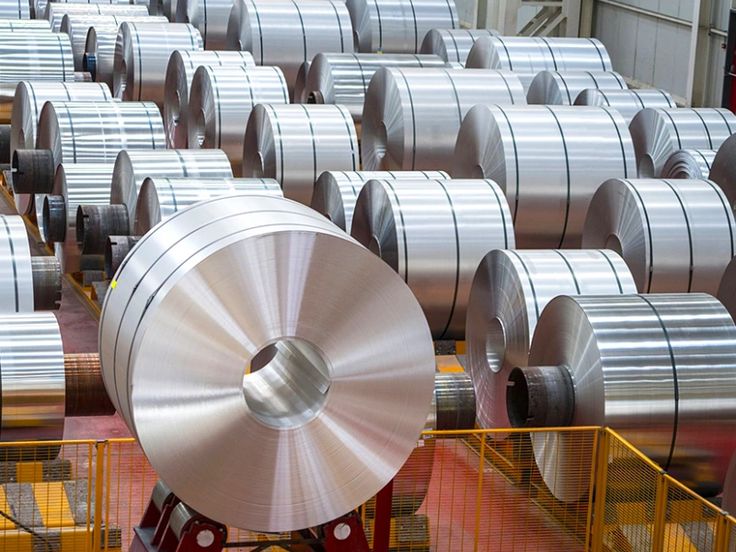
If you've spent any time sourcing conductors for transformers or motor windings, you already know the debate: copper or aluminum? For a lot of applications, aluminum wins on cost and weight without giving up much on performance. That's why aluminum winding wires and strips show up in everything from small distribution transformers to industrial motor coils across India and beyond.
We get asked a lot of the same questions by buyers and design engineers—what sizes are available, which insulation type suits their application, and how aluminum actually compares to copper in practice. So we put together this guide to cover the basics: what these wires are, the different types on the market, standard sizes, and where they're typically used. We'll also touch on a couple of related products—fiber glass covered wires and industrial foils—since most people sourcing winding wire end up needing those too at some point.
What Exactly Are Aluminum Winding Wires and Strips?
At the simplest level, these are aluminum conductors—round wire or flat strip—used to wind coils in transformers, motors, generators, and similar equipment. Manufacturers draw or roll high-purity aluminum into the required shape, then apply an insulation coating: enamel, paper, or fiber glass, depending on how much heat and mechanical stress the finished coil needs to handle.
The appeal of aluminum winding wires and strips (sometimes typed as "aluminum winding "wires"—same product, common typo) comes down to two things: weight and cost. Aluminum is roughly a third the weight of copper for the same volume, and it costs a fraction as much. For general-purpose electrical equipment, that trade-off makes a lot of sense.
The Different Types You'll Come Across
Not every winding wire is built the same, and picking the wrong type for your application usually shows up later as a reliability problem. Here's a rundown of what's out there.
Super enamelled round wire is the most common form. It's coated with an enamel layer — Polyester, Modified Polyester, Polyester Imide, or a Dual Coat (Imide-Amide) — and the specific coating depends on the thermal class you need, typically B (130°C), F (155°C), H (180°C), or DC (200°C). Because the coating is thin, it lets you pack more winding into a tight space, which is exactly why it's the default choice for motors and general transformer work.
Rectangular enamelled strips do a similar job but in flat form, and they're used where you need higher current-carrying capacity without eating up extra winding space. You'll see these mostly in transformer coils rather than motors.
Paper-covered wires and strips (DPC) use kraft paper, crepe paper, or thermally upgraded paper as insulation instead of enamel. These hold up well in oil-filled transformers, where mechanical strength and compatibility with the insulating oil matter more than compactness.
Fiber glass-covered wire is the one to reach for when things get hot—literally. We manufacture these across 155°C, 180°C, and 200°C classes as an aluminum fiber glass manufacturer, built for heavy-duty motors and coils that run at sustained high temperatures where enamel alone wouldn't hold up.
Standard Sizes
Sizing varies quite a bit depending on which type you're after:
- Round enamelled wire generally runs from 0.122mm up to 4.0mm in diameter
- Rectangular enamelled strips fall roughly between 6 and 70 sq. mm in cross-sectional area, with widths up to about 14 x 5 mm
- Paper-covered round wires typically span 2mm to 5mm, while flat strips go from about 8 sq. mm up to 120 sq. mm.
- Fiberglass-covered wire covers roughly 10 to 100 sq. mm.
All of this is produced against IS-13730, IEC-60317, and NEMA-MW specifications, so whichever size you land on, it should slot into a standard design without surprises.
Where These Wires Actually Get Used
In practice, aluminum winding wires and strips show up almost everywhere there's a coil involved:
Distribution and power transformers use them as a lighter, cheaper alternative to copper that still gets the job done. Electric motors—from small FHP motors to general industrial ones—rely on them heavily too. You'll also find them in electromagnetic coils, relays, and hermetic compressor windings that use higher-temperature DC-class wire. And a lot of rewinding shops keep aluminum wire on hand simply because it's more affordable to stock and use for repair work.
Aluminum vs. Copper—Is It Really Worth It?
Copper still wins on raw conductivity, no argument there. But for a huge chunk of real-world applications, the gap doesn't matter enough to justify the price difference. Aluminum costs noticeably less, weighs a third as much (which adds up fast on freight for bulk orders), and holds up fine against corrosion thanks to the natural oxide layer that forms on its surface. For cost-sensitive or weight-sensitive projects, it's often the more practical call rather than a compromise.
Two Products That Usually Come Up Alongside Winding Wire
If you're sourcing winding wire, there's a decent chance you'll need one of these too:
As an Aluminium Fiber glass manufacturer, we supply fiber glass covered aluminium wire across the 155°C to 200°C range for buyers who need extra thermal headroom in their coils — a common ask for industrial motor rewinds and heavy-load transformers.
We also work as an aluminum foil manufacturer, producing foil in 1050/1060 alloy grades with thicknesses from 0.9mm to 3.0mm. It's used in transformer winding, cable shielding, and a handful of other industrial applications where you need a thin but conductive aluminum layer.
Sourcing both from the same place as your winding wire saves a fair bit of coordination hassle, especially on larger projects with multiple material requirements.
What to Look for in a Manufacturer
A few things worth checking before you commit to a supplier: do they comply with IS, IEC, and NEMA standards; do they offer the full size and thermal-class range you need, not just the popular sizes; and can they actually deliver consistent quality batch to batch, not just on the sample they send you. It's also worth asking whether they handle related products like fiberglass-covered wire or aluminum foil—it's a good sign they understand the broader application, not just the wire itself.
Wrapping Up
Aluminum winding wires and strips aren't a compromise product—for most general and mid-range applications, they're simply the smarter economic choice. Knowing the type (enamelled, paper-covered, or fiber glass covered), the right size for your design, and where each one fits best will save you some headaches down the line. And if your project needs more than just wire—fiber glass-covered conductors or aluminum foil, for instance—it's worth checking whether your winding wire supplier covers that ground too.
Got a spec in mind? Send it over, and our team can put together sizing and pricing for your project.