
Al Foil Manufacturer for Transformer Winding: Specifications You Need to Know
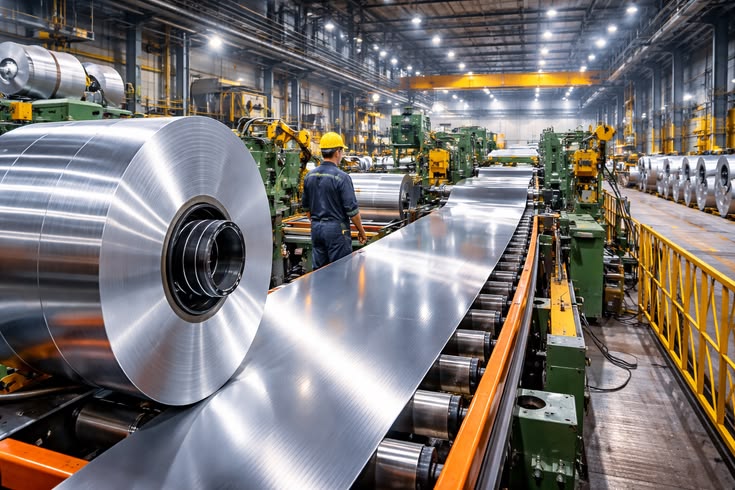
An Al foil manufacturer supplying transformer winding foil is dealing with a fairly different product than someone supplying packaging or general shielding stock, and honestly, getting the spec wrong here is one of the more expensive mistakes a transformer OEM can make. We've seen it happen—a coil that looked fine on paper then failed weeks into service because the temper or thickness wasn't quite right. So let's walk through what actually matters: alloy, thickness, temper, and the production quality behind all of it.
Why Anyone Uses Foil for Winding in the First Place
Aluminium is a lightweight, non-ferrous metal, and in its refined form it conducts electricity well—which is exactly why it shows up in transformer windings at all. In certain dry-type and cast-resin transformer designs, foil winding replaces or works alongside standard wire winding because it spreads current more evenly across the coil and handles higher current density in a tighter space. It's not some universal upgrade—for standard motor and transformer work, wire is still simpler and cheaper, and there's no reason to overcomplicate a design that doesn't need it. But for higher-current or space-constrained transformers, a good Al foil manufacturer working to the right spec genuinely changes how the finished unit performs.
Where This Material Actually Comes From
It helps to know where the raw material comes from before diving into specs. Aluminium doesn't exist as a pure metal in nature—it's extracted from bauxite ore and refined into alumina (aluminium oxide, one of the key aluminium compounds in this whole chain) through the Bayer process. From there, that alumina gets reduced to metallic aluminium through electrolysis—the Hall-Héroult process—which strips the aluminum element away from oxygen using an electric current run through a molten cryolite bath.
The resulting high-purity metal gets cast into ingots or slabs, then rolled down in stages: hot rolling first, then repeated cold rolling until it reaches foil gauge. Somewhere in that process, the metal work-hardens and needs intermediate annealing to get its ductility back—skip that step and you end up with foil that cracks mid-winding. A manufacturer who actually controls every stage of this carefully is a very different supplier than one who's just buying and reselling finished coil.
Alloy — The First Thing Worth Confirming
For transformer winding, purity is really the whole game, because purity in the alloy is what drives conductivity. 1050 and 1060 are the standard grades here—high-purity aluminium at roughly 99.5% and 99.6%, respectively, with barely any alloying elements diluting that conductivity. Other alloys exist for applications that care more about strength or formability, but for winding foil, 1050/1060 covers most of what actually gets ordered. If a supplier can't tell you the exact alloy without checking, that's worth pressing on before you commit to real volume.
Thickness and Width
Transformer winding foil tends to run thicker than what most people picture when they hear ""foil"—commonly somewhere under 1 mm up to around 3 mm, depending on how much current the specific winding needs to carry. Width comes down to your winding equipment and coil geometry, and a decent Al foil manufacturer should be able to slit to your exact width rather than pushing you toward their standard pre-cut rolls. "Close enough" sounds fine until the transformer's actually under load, and then it isn't.
Temper—The Part People Underestimate
Temper is how hard or soft the metal ends up after its final processing pass, and it matters more for winding than people expect. Dead soft or semi-soft tempers are the norm here, because the foil needs to wrap tightly around the winding form without cracking. A harder temper holds its shape better in other contexts, but it's the wrong call for winding—this application needs flex, not rigidity.
Surface and Insulation
In foil-wound transformers, the foil is usually interleaved with an insulating layer—paper or a polymer film—between turns. The foil surface needs to be clean, without oxide inconsistency or leftover rolling oil, since contamination affects both the insulation bond and the winding's electrical performance. This is genuinely one of the details that separates a manufacturer who understands transformer applications from one who's only ever supplied general packaging or shielding foil.
What Test Data Is Actually Worth Asking For
A proper mill test certificate—tied to the specific batch you're buying, not a generic sheet—should show composition, tensile strength, and elongation. Not a document that could describe any production run from any year. For transformer winding specifically, it's worth asking directly whether they've supplied foil for winding applications before, since the tolerances here are noticeably tighter than for general shielding stock.
Manufacturer or Reseller — It Matters More Here
This distinction matters more for transformer winding foil than almost anywhere else, simply because the tolerances are tighter and a failure costs more. A genuine Al foil manufacturer confirms alloy composition without hesitation, can run custom thickness and width orders, and can actually talk through how their foil behaves specifically in winding applications—not just quote you a rate per kilogram. A reseller, working off existing stock, usually can't guarantee the batch consistency a production-scale transformer order actually needs.
Before You Order
- Confirmed alloy grade—1050/1060, not a vague "1000 series" answer
- Thickness and width matched exactly to your winding design
- Correct temper—dead soft or semi-soft, for flexibility
- A mill test certificate tied to your specific batch
- Some track record supplying foil for transformer winding, specifically
FAQ
What alloy does an Al foil manufacturer use for transformer winding?
Typically 1050 or 1060—high-purity aluminum grades (99.5% and 99.6%) chosen because minimal alloying content preserves the most conductivity.
How thick is aluminium foil used in transformer winding?
It varies by design, but a common range runs from under 1mm up to around 3mm, scaling with how much current the specific winding needs to carry.
Why does temper matter for transformer winding foil?
A dead soft or semi-soft temper lets the foil wrap tightly around the winding form without cracking, which is essential for a clean, reliable coil.
How is aluminium foil actually produced?
It starts as bauxite ore, gets refined into alumina through the Bayer process, then reduced to metallic aluminum via electrolysis in the Hall-Héroult process, before being cast, hot-rolled, and cold-rolled down to foil gauge with intermediate annealing along the way.
Specifying a transformer winding project? Send us your thickness, width, and current requirement, and we'll tell you straight what we can supply.